





Most people get brand voice wrong.
They think it’s about picking three adjectives (authentic! bold! friendly!) and calling it a day.
Or they copy what’s working for someone else and wonder why their content feels flat.
Here’s the truth: your brand voice isn’t something you invent. It’s something you uncover.
I’ve worked with dozens of creatives and coaches who struggled with this. They’d show up differently on LinkedIn than on Instagram. Their emails sounded corporate while their Stories felt forced-casual. They were exhausting themselves trying to be someone they weren’t.
And their audience could feel it.
Your brand voice is the personality and emotion infused into all your communication. It’s how you make people feel when they read your words, watch your videos, or scroll through your feed.
When you get it right, everything becomes easier. Content flows. Clients recognize you instantly. You stop second-guessing every caption.
This article will show you how to find and define your actual voice, not the one you think you should have.


Embody your true Brand Archetype and 10x your biz
What Is Brand Voice (And Why Most Definitions Miss the Point)
Most definitions will tell you brand voice is “the distinct personality a brand takes on in its communications.”
Technically correct. Completely unhelpful.
Here’s what brand voice actually is: it’s the consistent way you sound across every platform that makes someone say, “That’s so you.”
It’s not about being the same everywhere. It’s about being recognizably you everywhere.
Think about how you talk to your best friend versus your clients versus a room full of strangers. The words change, but something essential stays the same. That’s your voice.
The confusion happens when people mix up brand voice and tone. They’re related but different.
Your voice stays consistent. It’s your core personality. Your tone shifts based on context and the emotional temperature of the moment.
Example from my own brand:
My voice is direct, personal, occasionally irreverent, and deeply human.
My tone when someone just lost a client is empathetic and gentle. My tone when calling out toxic hustle culture is sharp and unapologetic. Same voice, different tones.
Understanding this distinction changes everything about how you show up online.

Why Traditional Brand Voice Guidelines Fail Creatives and Coaches
Corporate brand voice guidelines are built for teams who need to sound unified.
You’re not a team. You’re a person building a personal brand.
Most brand tone of voice documents I’ve seen include:
- A list of personality adjectives
- Words to use and avoid
- Examples of “on brand” vs “off brand” messaging
These work fine for Coca-Cola. They’re death for independent creators.
Why? Because they turn your natural way of communicating into a performance.
I’ve watched clients freeze up after creating these documents. They’d overthink every post, filtering their personality through a rulebook they created for themselves.
The irony is painful.
Your competitive advantage in 2026 isn’t having perfect brand voice guidelines. It’s being willing to sound like yourself when everyone else sounds like ChatGPT.
People don’t follow brands because they’re consistent. They follow humans because they’re real.

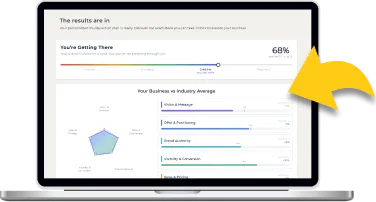
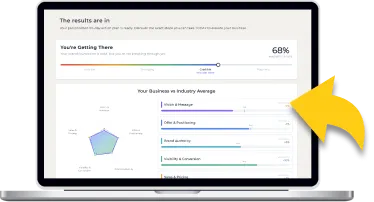
You’re Closer to Premium Clients Than You Think
See what’s costing you premium clients (takes 3 min)
Brand Voice Examples That Actually Work
Let me show you what distinctive brand voice looks like in practice.
Example 1: The Honest Observer
This voice calls things as they are. No sugar-coating, no performative positivity. Think of creators who say “this industry trend is garbage and here’s why” while everyone else is jumping on the bandwagon.
Voice elements: Direct, skeptical of hype, values truth over likability, comfortable being the dissenting voice.
Example 2: The Generous Teacher
This voice makes complex things simple without dumbing them down. They share freely, credit others, and genuinely want you to succeed even if you never hire them.
Voice elements: Clear, generous, practical, builds trust through giving rather than gatekeeping.
Example 3: The Vulnerable Leader
This voice shares the messy middle, not just the wins. They talk about doubt, failure, and the non-linear path while still being someone you’d trust to guide you.
Voice elements: Honest, human, strategic about vulnerability, balances strength with softness.
Notice something about these brand voice examples?
None of them are trying to be everything to everyone. They’re specific. They probably annoy some people. That’s the point.
The brands that work have clear voices that naturally repel wrong-fit clients while magnetizing the right ones.
How to Create a Social Media Brand Voice That Feels Like You

Stop trying to create something. Start excavating what’s already there.
Here’s the process I use with clients:
Pull from real conversations
Record yourself explaining your work to a friend. Don’t prepare. Just talk.
Listen back and notice:
- Phrases you repeat
- How you structure explanations
- Your natural rhythm and pacing
- Where you get animated versus measured
This is your voice before you started performing for algorithms.
Identify your non-negotiables
What beliefs do you hold so strongly you’d lose clients over them?
These become the backbone of your voice. When you know what you stand for, your communication gains authority.
For me, it’s this: I believe personal branding rooted in performance and hustle eventually breaks people. I’ll lose clients who want the “fake it till you make it” approach. That’s fine.
Notice your anger and your joy
What makes you unreasonably frustrated about your industry? What lights you up?
These emotional trigger points shape how to create a social media brand voice that has actual personality.
My frustration with generic “authenticity” advice makes my voice sharper when I’m writing about personal branding. My joy around creative freedom makes it warmer when I’m talking about location independence.
Test in low-stakes places first
Start with Stories or LinkedIn comments. Try out different ways of saying things.
Notice what feels effortless versus what feels like you’re wearing someone else’s clothes.
The goal isn’t to sound impressive. It’s to sound unmistakably like you.
Embody your true Brand Archetype and 10x your biz
Workshop: Uncover Your Brand Voice in 60 Minutes

Grab a notebook. Turn off notifications. Let’s do this.
Exercise 1: The Voice Archaeology Dig (20 minutes)
Step 1: Pull up 10 of your most engaging social media posts, emails, or messages. Not the ones that performed well. The ones where people replied with “this is exactly what I needed” or “you read my mind.”
Step 2: Read them out loud. Highlight any phrases that sound distinctly like you. Circle words or sentence structures you use repeatedly.
Step 3: Write down patterns you notice:
- Do you ask questions or make statements?
- Long sentences or short?
- Do you use humor, metaphor, confession?
- Where do you sound most confident?
Step 4: Now pull up 3 posts you wrote that fell flat or felt forced. What’s different? Where were you performing instead of communicating?
Exercise 2: The Conversation Test (15 minutes)
Set a timer for 5 minutes. Record yourself answering this question out loud:
“Why do you do the work you do, and who is it really for?”
Don’t script it. Just talk like you’re explaining this to someone who genuinely wants to understand.
Listen back and transcribe 2-3 sentences that feel most true.
These sentences are closer to your real voice than anything you’ve written “for your brand.”

Track not just engagement, but how you feel after posting. Exhausted or energized? That tells you everything.
Exercise 3: The Contrast Exercise (15 minutes)
Create two columns:
Left column: Words and phrases you use naturally
Right column: Words and phrases you think you “should” use professionally
Be honest. If you naturally say “that’s BS” but write “that’s problematic,” put both down.
Your brand voice lives in the left column. The right column is where your voice goes to die.
Now rewrite three recent captions or posts using only left-column language. Notice how much easier it flows.
Exercise 4: Your Voice Formula (10 minutes)
Based on what you’ve uncovered, complete these sentences:
- My voice is _____ (personality traits: direct, playful, thoughtful, provocative)
- I sound most like myself when I’m talking about _____
- I never sound like myself when I try to be _____
- Three words that capture my natural communication style: _____, _____, _____
- One person whose communication style resonates with me (not to copy, but to understand why): _____
This isn’t a rigid framework. It’s a North Star. When you’re about to post and feel uncertain, check these sentences. Are you close to this or are you performing?
Implementation: The 7-Day Voice Consistency Challenge
For the next week:
Days 1-3: Post or write using only your natural voice. No editing for “professionalism.” See what happens.
Days 4-5: Notice where you still feel the urge to sound “different.” Why? What are you afraid will happen if you just sound like you?
Days 6-7: Experiment with your tone (not voice) across different contexts. Same personality, different emotional registers.
Track not just engagement, but how you feel after posting. Exhausted or energized? That tells you everything.
You’re Closer to Premium Clients Than You Think
See what’s costing you premium clients (takes 3 min)
Frequently Asked Questions
What is brand voice?
Brand voice is the consistent personality and communication style that defines how you sound across all platforms. It’s not what you say, but how you say it. Your voice encompasses word choice, sentence structure, humor level, and the emotional quality of your messaging. While tone may shift based on context, voice remains recognizably yours.
How do you create a brand voice?
Start by analyzing how you naturally communicate when you’re not performing. Record casual conversations about your work, review your most engaging content, and identify patterns in your phrasing and structure. Your brand voice isn’t invented from scratch but excavated from how you already speak when you’re most yourself. Focus on consistency, not perfection.
What’s the difference between brand voice and tone?
Brand voice is your core personality that stays consistent. Tone is how that personality adapts to different situations and emotions. Your voice might be direct and thoughtful. Your tone could be empathetic when comforting a struggling client or sharper when challenging industry BS. Same voice, different tones.
What should brand voice guidelines include?
For personal brands, skip corporate-style rulebooks. Instead, document: your core communication values, phrases that sound distinctly like you, topics where your voice is strongest, and examples of when you felt most authentic versus most performative. Keep it simple and revisit quarterly as you evolve.
How do I find brand voice examples to learn from?
Look for creators whose content makes you think “I wish I’d said that.” Study not just what they say but how they structure sentences, when they use humor, how they handle difficult topics. Don’t copy their voice but understand why their communication resonates. Then apply those insights to your own natural style.
Can your brand voice change over time?
Yes, and it should. Your brand voice evolves as you do. The key is intentional evolution, not random inconsistency. As you gain experience, your audience shifts, or your business matures, your voice naturally becomes more refined or confident. What doesn’t work is abandoning your voice every six months chasing trends. Let it deepen, not disappear. If your voice from two years ago feels slightly different but recognizably you, that’s growth. If it feels like a different person entirely, you were probably performing.
Should my brand voice be the same across all platforms?
Your voice should be consistent, but your expression adapts to the platform. Think of it like wearing the same personality to a coffee meeting and a conference. You’re still you, but context matters. On Instagram you might be more visual and punchy. On LinkedIn, more structured and insight-driven. In email, more intimate and detailed. The mistake is creating completely different personas for each platform. Your ideal clients should recognize you immediately whether they find you on Twitter or in their inbox.
How do I know if my brand voice is actually working?
Look for these signs: You write content faster because you’re not overthinking it. People quote your exact phrases back to you. You attract clients who already feel like they know you. Your engagement comes from depth, not just volume. You feel energized, not drained, after creating content. And most importantly, the wrong-fit clients naturally filter themselves out. If none of this is happening, you’re probably still performing rather than communicating. Go back to the workshop exercises and get honest about where you’re hiding.

Michele Zangrandi
Founder at Inner Light Digital
Sold my agency to follow my passion. Now I help leaders build magnetic personal brands that attract dream clients without chasing or selling.
Follow me


Get some more inspiring content
Get some more
inspiring content